“The situation is inhumane.” MSF Nurse testimony from inside Gaza’s collapsing health system

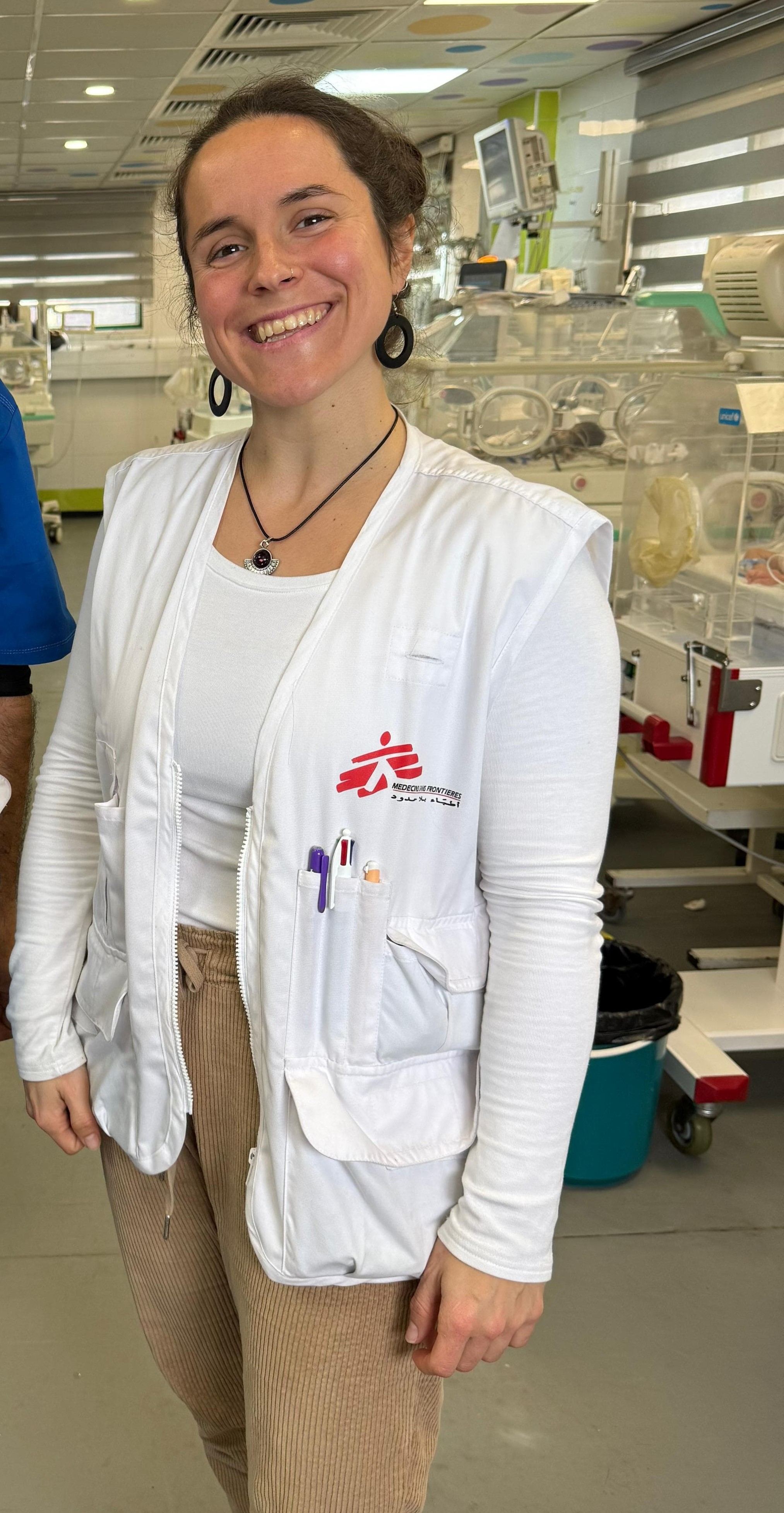
Rocío Simón Martínez, Nurse Activity Manager with Médecins Sans Frontières (MSF), was among the last international MSF staff to leave Gaza at the end of February 2026.
She had spent nearly four months working alongside Palestinian colleagues in hospitals and clinics across the territory.
What she saw was a health system pushed beyond collapse.
“The situation is inhumane, and every day we see the medical consequences for people in Gaza due to the conditions they are forced to live in.”

Rocío had already worked in Gaza once before, between November and December 2024.
She returned again in November 2025 as a Nurse Activity Manager and stayed until 26 February 2026 — when all international staff from NGOs affected by Israel’s decision to deregister 37 organisations were required to leave.
Since then, all MSF international staff have been forced out of Gaza.
MSF remains committed to providing medical care with Palestinian staff for as long as possible.
“I extended my stay when we learned that international replacements would not be allowed into Gaza.”
As Nursing Manager for the south of Gaza, Rocío oversaw several facilities in the south and also travelled north to support Al-Helou hospital and the clinic in the Al-Zeytoun area of Gaza City.

Even during what has been called a ceasefire, it never felt like the violence had stopped.
“Drones were constantly overhead. You could hear airstrikes every day.”
Mass casualty events may have become less frequent, but fear and instability never disappeared.
What she saw during this assignment was worse than before.
“Fewer buildings are standing. There are more tents. More families displaced and squeezed into ever-shrinking areas.”
The health system is devastated.
And the medical consequences of living conditions are everywhere.
Children arrive with pneumonia and bronchiolitis after weeks exposed to winter cold in makeshift tents with no heating.
Clean water remains scarce, and acute gastroenteritis is constant.
“People queue every day just to collect water, as they have been doing for more than two years.”
Skin diseases spread easily in overcrowded shelters where hygiene is almost impossible.

The need for wound care has become overwhelming.
“At one point, we were performing up to 900 dressings per week.”
Many of these wounds are months old — injuries that never healed properly.
Rocío treated teenagers only 18 or 19 years old who had been paralysed by spinal gunshot injuries.
They remain confined to beds, developing pressure ulcers that easily become infected in these living conditions.
MSF teams regularly see patients with external fixators still attached to their limbs.
They are waiting for surgeries that cannot be performed inside Gaza.
Medical evacuations are extremely limited.
According to the World Health Organization, 18,500 patients need specialised care that does not exist in Gaza, yet they are not allowed to leave.

One patient Rocío cannot forget is Mohamed.
He is three years old.
He suffers from chronic malnutrition and complex medical needs.
MSF treated him with therapeutic milk and he improved at first. But once he returned home, his condition deteriorated again.
The last time Rocío saw him, he had lost significant weight.
Because Mohamed is coeliac and has specific dietary needs, he cannot tolerate the peanut-based treatment normally used for severe malnutrition outside the hospital.
“He is still waiting for evacuation.”
Without access to specialised care outside Gaza, children like Mohamed may not survive.

MSF’s Palestinian staff continue to work under the same conditions as the patients they treat.
They face the same insecurity.
The same shortages.
The same psychological pressure.
“Our Palestinian colleagues are the ones carrying MSF’s response forward.”
But supporting them remotely will never replace standing beside them in hospitals and clinics.
When Rocío finally left Gaza, the moment stayed with her.
“As I sat on the bus leaving Gaza, I had a knot in my throat.”
Every time she returns, the destruction is worse.
“This time, I left wondering what it will look like if we are allowed back.”

Since 1 January 2026, MSF has not been able to bring any supplies into Gaza.
Since the end of February, all international staff have been forced to leave following Israel’s decision to deregister MSF and 36 other NGOs from operating in Palestine.
The consequences could be devastating.
People in Gaza already depend almost entirely on humanitarian assistance — for water, food, healthcare, sanitation and education.
“The needs are enormous.”

Before leaving, Rocío says people repeatedly asked MSF staff to share what they had witnessed.
“Palestinians ask us to speak about what we have seen — about how they are living, about the continuous violence and blockade that shape every aspect of their lives.”
For now, that is what she can do.
“Speak. And hope that one day MSF — and all the other organisations — will be allowed to work freely again.”
Because people in Gaza desperately need it.