1. Home
  2. MSF Middle East Appeal | Donate to Emergency Medical Care

MSF Middle East Crisis Appeal

Support our live-saving teams across the Middle East

Through the shattered roads of southern Lebanon, our teams move between villages devastated by Israeli bombardment, this time in Jebshit, families return under a fragile “temporary ceasefire.”

Inside one mobile medical unit, care comes together: primary healthcare, essential medication, mental health support, and stress relief sessions, bringing not just treatment, but a sense of presence where it’s needed most. Caption
Through the shattered roads of southern Lebanon, our teams move between villages devastated by Israeli bombardment, this time in Jebshit, families return under a fragile “temporary ceasefire.” Inside one mobile medical unit, care comes together: primary healthcare, essential medication, mental health support, and stress relief sessions, bringing not just treatment, but a sense of presence where it’s needed most.

Right now, Médecins Sans Frontières/Doctors Without Borders (MSF) is providing urgent medical care and humanitarian support following the recent escalation of conflict across the Middle East.  

The war has had a devastating impact, with civilians bearing the brunt. Thousands of people have been killed or injured across the region, and millions have been forced from their homes, often multiple times. In Lebanon alone, more than one million people have been displaced, while large numbers of households in Iran have also been affected by displacement and destruction.  

Our teams have launched emergency responses in Iran and Lebanon, where we provide critical medical care in hospitals and humanitarian aid for people displaced by the violence. We are also working in countries across the region facing the ripple effects, including Palestine, Iraq, Syria, and Yemen.  

Your support helps MSF reach more people with life-saving care. 
Donate to our Middle East Emergency Fund now.


THE CRISIS UNFOLDING

Why now?

The situation is critical. Displacement is surging. Shelters are overcrowded. Access to food, clean water, and basic healthcare is increasingly out of reach. MSF teams are responding where the need is greatest - running mobile clinics for displaced families, supplying hospitals with essential medicines and fuel, and providing urgent medical and psychological care in overcrowded shelters. 


Lebanon, Anout, 2026. Hajje Zaynab, 80 (right) Caption
Lebanon, Anout, 2026. Hajje Zaynab, 80 (right)
MSF medical team working with Ministry of Public Health staff in Jabal Amel hospital, Sour, southern Lebanon. 

Throughout 46-day escalation of the war in Lebanon, and continuous strikes by Israeli forces, health care workers in southern Lebanon continued to respond to mass casualty incidents – almost daily. 
People who stayed now face severe humanitarian and medical needs. Attacks on healthcare, ambulances, and civilian infrastructure have made movement dangerous and restricted access to care. Health facilities have been damaged or forced to close, and fear of attacks has led many to delay or avoid seeking treatment. Chronic conditions have gone unmanaged, with patients lacking access to essential medications and follow-up. Many didn’t leave their homes due to the high economic impact of displacement, lack of funds for fuel and shelter, insecurity in Beirut caused by Israeli strikes, and memories of the indignity that displacement brings from fleeing during previous wars. Caption
MSF medical team working with Ministry of Public Health staff in Jabal Amel hospital, Sour, southern Lebanon. Throughout 46-day escalation of the war in Lebanon, and continuous strikes by Israeli forces, health care workers in southern Lebanon continued to respond to mass casualty incidents – almost daily. People who stayed now face severe humanitarian and medical needs. Attacks on healthcare, ambulances, and civilian infrastructure have made movement dangerous and restricted access to care. Health facilities have been damaged or forced to close, and fear of attacks has led many to delay or avoid seeking treatment. Chronic conditions have gone unmanaged, with patients lacking access to essential medications and follow-up. Many didn’t leave their homes due to the high economic impact of displacement, lack of funds for fuel and shelter, insecurity in Beirut caused by Israeli strikes, and memories of the indignity that displacement brings from fleeing during previous wars.

What is MSF doing?

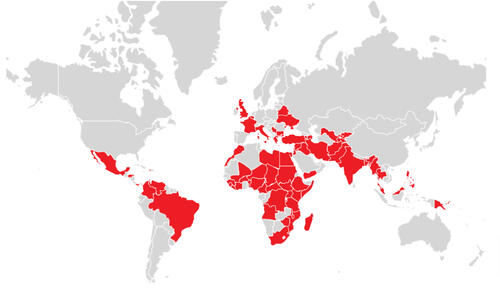
MSF teams across the region are fully mobilized, with emergency teams deployed in Lebanon, Armenia, and Iraq. Since February 28, MSF has shipped more than 281 tons of medical supplies for projects across the Middle East, including in Iraq, Iran, Lebanon, Palestine, Israel, Jordan, Syria, and Yemen.

Why MSF? 

MSF has been working in conflicts and crises since our founding in 1971. From paediatric nurses to off-road drivers, our experienced staff are responding to complex and fast-moving humanitarian emergencies across more than 70 countries, including high-insecurity environments. We think fast, act fast and adapt to save lives.

YOUR IMPACT

As the war deepens humanitarian crises across the Middle East, civilian populations bear the brunt. There has never been a more important time for your support. 

2_2_vaccine

79%

OF EVERY € DONATED PAYS FOR MEDICAL PROJECTS

1_8_communications

16%

OF EVERY € DONATED IS SPENT ON FUNDRAISING

3_8_OfficeManagment

5%

OF EVERY € DONATED IS SPENT ON OFFICE MANAGEMENT